Sewer Line Problems Before a Home Sale: Your Options
Selling a home and the sewer camera found a problem? We explain inspections, spot repair vs. full replacement, and why lining often isn’t an option.
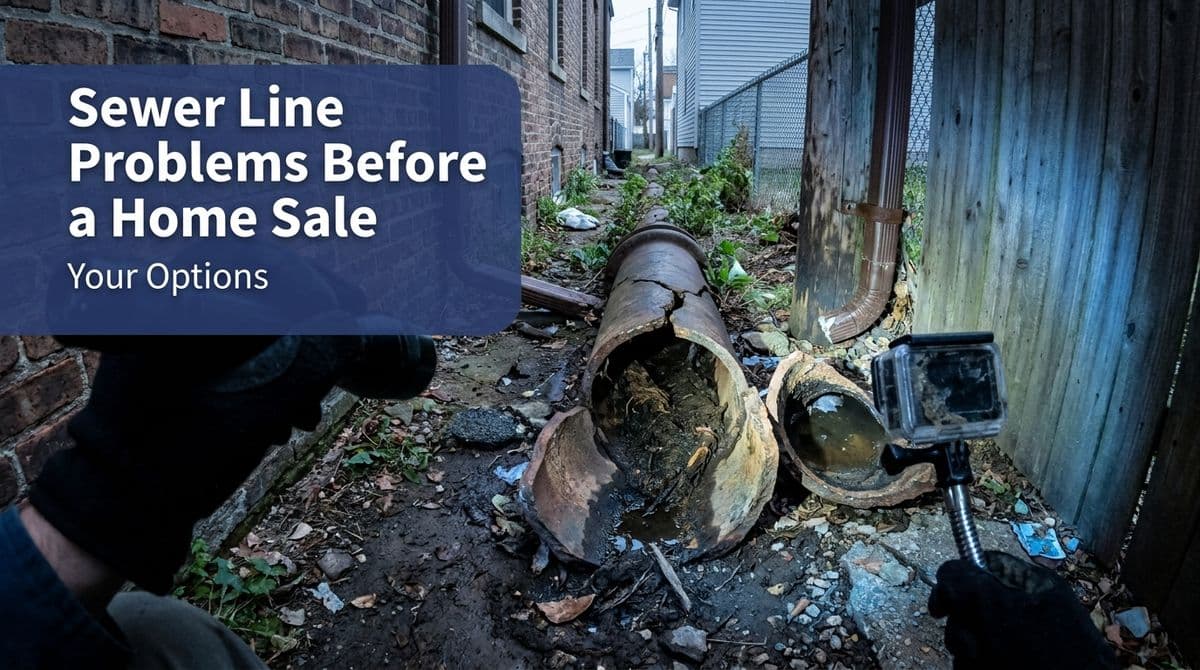
Getting Hit with a Sewer Line Problem Right Before Closing
We recently got a call from a homeowner — let’s call him Brian — who was in the middle of selling his house. During the buyer’s inspection, the home inspector ran a camera down the sewer line and found a crack. Suddenly, Brian went from “we’re almost at closing” to “do I need to replace my whole sewer line?”
Brian had the same questions we hear all the time:
- Is this just a small spot repair, or do I need a full replacement from the house to the street?
- Can we save money by doing a pipe lining instead of digging?
- How do we handle all this while there’s a buyer, an agent, and sometimes tenants involved?
We walked Brian through the process step by step, and we do the same for every seller in this situation. Let’s break down how we look at sewer line problems during a home sale, what your options really are, and why pipe lining isn’t always the magic fix it sounds like.
Why We Always Do Our Own Sewer Camera Inspection
In Brian’s case, the buyer’s inspector had already done a camera inspection and recorded the video. That’s helpful, but we told him what we tell everyone: we don’t base major decisions on someone else’s camera footage. We always perform our own camera inspection.
Here’s why we insist on that:
- Different equipment, different clarity: Our cameras are purpose-built for sewer diagnostics. We know exactly what we’re looking at and can record high-quality footage.
- We need exact locations and depths: When we run our camera, we also locate the pipe from above ground. That helps us mark where we’d need to dig and how deep, which dramatically affects the estimate.
- We take responsibility for our recommendations: If we’re going to recommend a $3,000–$20,000 fix, we want to be 100% sure we’ve seen the problem with our own eyes (and camera).
During a sale, timing matters. When you call us, we typically can:
- Schedule a camera inspection within 24–72 hours, depending on how busy the week is.
- Coordinate access with tenants, listing agents, or the buyers so we’re not disrupting everyone’s schedule.
- Provide video, photos, and a written report you can share with all parties.
That first camera inspection is what tells us whether you’re looking at a small repair, a big job, or sometimes just a cleaning or maintenance issue.
Spot Repair vs. Full Replacement: How We Decide
Brian’s big question was whether he needed a full replacement from the house to the street, or if we could just dig up and fix one section. We see this decision point all the time, and here’s how we think it through.
When We Recommend a Spot Repair
We lean toward a spot repair when:
- The damage is isolated to one short area (a crack, offset, or root intrusion in a specific joint).
- The rest of the pipe looks reasonably healthy for its age.
- The access point and depth make it practical to dig only that section.
A typical spot repair might involve excavating a small section of your yard, cutting out 5–10 feet of bad pipe, and installing new PVC pipe with proper connections. In many cases:
- We can complete the spot repair in 1 day.
- The sewer is usually back in service the same day, sometimes with only a few hours of downtime.
- We backfill and rough-grade the area; final landscaping is usually up to the homeowner.
For a sale, we document everything — before and after video, photos of the open trench, and invoices that clearly describe the work performed. That documentation often helps keep negotiations on track.
When We Recommend a Full Sewer Line Replacement
Sometimes, like Brian suspected, a full replacement makes more sense. We usually lean this way when:
- There are multiple problem areas along the line (cracks, roots, offsets).
- The pipe is an older material like clay, Orangeburg, or very deteriorated cast iron.
- There’s a belly (sag) or partial collapse that affects the way sewage flows.
- Previous spot repairs have already been done and the remaining pipe still looks questionable.
Full replacements are bigger projects, so the logistics matter. Here’s what we typically tell homeowners to expect:
- Timeline: Most full replacements take 1–3 days, depending on length, depth, and obstacles like trees, sidewalks, or driveways.
- Excavation: We bring in machinery, dig a trench along the route of the existing pipe, remove the old line, and install new code-approved piping with the correct slope.
- Restoration: We backfill and compact the soil. Basic restoration is included; major concrete or landscaping repairs can be handled separately, depending on your agreement.
During a home sale, we also:
- Communicate with your real estate agent so they understand the scope and timing.
- Provide final inspection reports and camera footage for the buyer’s peace of mind.
- Work with you to schedule around tenants or occupancy so the disruption is as limited as possible.
Why Pipe Lining Isn’t Always an Option
Brian asked about pipe lining because he’d heard it could avoid digging up the yard. We use trenchless methods when they’re appropriate, but we’re always honest about their limits.
Here’s how we explained it to him, and how we explain it to every homeowner: a liner basically creates a new pipe inside the old one. The lining material is pulled or blown through the existing pipe and then cured in place. The important part is this: the liner follows the shape of the old pipe.
That means if the existing line has:
- A belly (a sag where water and waste collect)
- A collapse or severe deformation
- Sections that are already flattened or crushed
…then the liner will simply follow those defects. As we told Brian on the phone: if there’s a belly or collapse, you really can’t line that section effectively because the lining machine will just take on that bad contour. In cases like that, we almost always recommend excavating and installing all new pipe.
We reserve lining for situations where:
- The pipe is structurally sound enough to hold a liner.
- The problems are limited (for example, minor cracking or root intrusion) but the access is difficult.
- There’s a strong reason to avoid excavation (heavily landscaped yards, finished surfaces, etc.).
Because we warranty our work, we’re careful not to sell lining where it’s likely to fail. Most of the time, especially when we see bellies and collapses, we recommend new pipe instead of a liner.
Insurance, Payment, and Documentation for Your Sale
Like many homeowners, Brian also asked if we could work directly with his insurance company for reimbursement. Our policy is straightforward: you pay us directly, and then you submit our invoice and documentation to your insurance if your policy covers it.
Here’s how we help on that front:
- We provide detailed, itemized invoices that clearly describe the cause and scope of the work.
- We document the job with photos and camera footage, which can support your claim.
- We make our findings available to you and your agent so everyone’s on the same page during negotiations.
Some sellers choose to complete the repair before closing; others use our estimate as a basis for a credit at closing. We’ll walk you through both options and share what we’ve seen work best in your local market, but ultimately the decision is between you, your agent, and the buyer.
How We Guide You Through a Sewer Issue During a Home Sale
We know a sewer line problem can feel like a deal-breaker, especially when it pops up late in the process. Our job is to give you clear information and practical options so you can make a smart decision and keep your sale moving.
When you call us with a situation like Brian’s, here’s how we typically handle it:
- We schedule our own camera inspection and locate the line so we know exactly what we’re dealing with.
- We review the footage with you, explain what we see, and answer your questions in plain language.
- We lay out options — spot repair, full replacement, or (when appropriate) lining — and explain pros, cons, and costs.
- We coordinate with your agent, buyer, or tenants to minimize disruption and keep everyone informed.
- We document everything so the repair doesn’t become a question mark during inspections or at the closing table.
If you’re selling a home and a sewer camera turns up bad news, you’re not alone — we see it all the time. With the right inspection and honest guidance, we can help you choose the repair that makes the most sense for your house, your timeline, and your budget.