Clean Fill Dirt, Permits & Paperwork for Big Backfills
Planning a big backfill project? Learn the difference between free fill dirt and tested clean soil, plus permits, paperwork, and real-world cost per truckload.
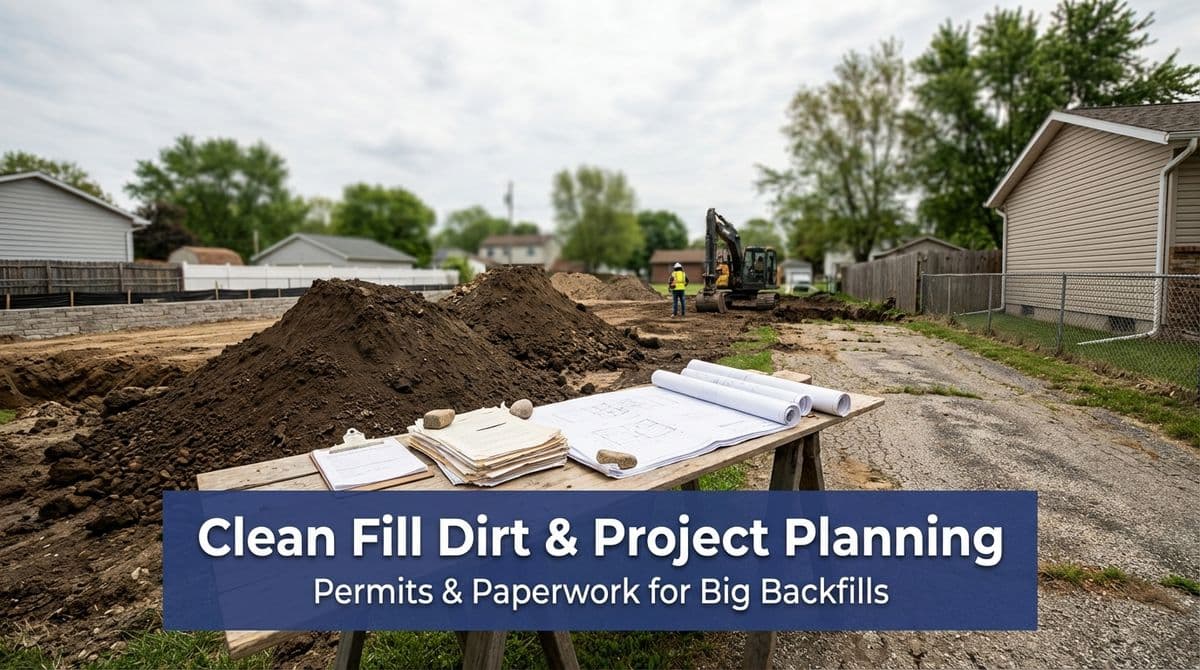
A Big Backfill Request That Raised Big Questions
We recently got a call from a customer — let’s call him Tom — who was working on a major backfill project on his property. He told us he’d found our number online and needed a “bigger number of soil for fill” and didn’t care what kind, as long as it was clean.
Tom already had his town permit, but his township wanted to verify that any soil brought in was clean and properly documented. He was talking about 70–80 tri-axle truckloads and had the whole access route planned: we’d come down the main street, make a U-turn at the dead end, pull up to the edge of the property, and just keep dumping while he moved the material around himself.
As we walked through his options, we realized he was asking the same questions most homeowners (and even contractors) have about big fill dirt jobs: What counts as clean soil? Do I really need paperwork? Why does tested fill cost so much more than “free dirt”?
So we wanted to walk through what we explained to Tom, because the same rules apply to just about any large backfill project in our area.
Clean Fill Dirt vs. “Free Dirt” — What’s the Real Difference?
The first thing we clarified for Tom was the difference between two very different products that people often lump together:
- Uncertified, excavated dirt (what many people call “free fill”)
- Tested, documented clean fill (with paperwork and lab reports)
We told him plainly: We can bring in excavated dirt at no material cost if the town doesn’t require testing or documentation. That’s the stuff that might come straight off an excavation site where a foundation or pool was just dug. It’s suitable for certain uses, but there are no lab tests or official certifications attached.
However, Tom’s township specifically wanted proof the soil was clean. That changes everything. When a town or county asks for documentation, we’re talking about tested, certified fill, and that involves:
- Sampling the soil
- Sending it to a certified lab
- Reviewing results for contaminants (metals, hydrocarbons, etc.)
- Issuing paperwork that can be submitted to the municipality
That testing, handling, and paperwork is why we had to quote Tom around $250 per tri-axle load instead of “free.” The dirt isn’t really the cost — the verification is.
Why Towns Care So Much About “Clean” Soil
From Tom’s perspective, dirt is dirt. From the township’s perspective, it’s a potential environmental issue if it’s not handled correctly. We walked him through a few reasons towns are strict about this:
- Contamination risks: Fill can carry fuel residues, heavy metals, construction debris, or other contaminants.
- Drainage and grading: Poor-quality fill can impact stormwater runoff and create erosion or flooding problems.
- Future liability: If someone later finds contaminated soil on a property, the town wants to show they required proper documentation.
That’s why many municipalities, like Tom’s township, either require or strongly prefer lab-tested fill for large backfill projects. When we supply soil with paperwork, it comes with the documentation the town can review and keep on file.
Permits, Paperwork, and Who Does What
Tom had already done one big thing right: he secured his permit before calling us. For anyone planning a significant fill project (dozens of truckloads, major grading changes, etc.), we always recommend starting here:
- Check with your town’s building or engineering department.
Ask what permit is needed for importing fill and whether tested, documented soil is required. - Ask if they need lab reports or just a supplier letter.
Some towns accept a supplier’s certification; others want formal lab results. - Confirm any volume limits.
Like Tom, you might be planning 70–80 tri-axle loads. Towns often have thresholds where extra approvals kick in.
On our side, when a town requires documentation, we can provide:
- Clean fill from approved sources
- Testing paperwork or lab reports that match what the municipality is asking for
- Delivery records showing how many loads were brought in and when
We told Tom the testing in his case would be handled here in New Jersey through the appropriate channels, so his township could feel confident signing off on the project.
Cost Breakdown for Large Backfill Projects
Once Tom understood the difference between “free” dirt and tested clean fill, his next question was obvious: “How much per load?”
Here’s how we broke it down for him, and it’s the same basic rule we use for any similar project:
- Uncertified excavated fill: Material can be free if there’s no testing or paperwork required (you still pay for trucking, fuel, and equipment as applicable).
- Tested, certified clean fill: Around $250 per tri-axle load in Tom’s case, because testing, documentation, and stricter handling are involved.
We also explained that the unit price per load doesn’t typically drop just because the quantity is large (70–80 trucks in his case). Testing, compliance, fuel, and the cost of running a heavy dump truck (these trucks are extremely expensive pieces of equipment) don’t really change whether we’re bringing 5 loads or 50.
Planning Your Own Fill Dirt Project
If you’re looking at a major backfill job like Tom’s, here are a few tips we always share with homeowners:
- Know your town’s rules first. Don’t assume you can bring in “any dirt.” Ask specifically about testing and paperwork.
- Be ready with access details. Tom knew exactly how we would enter, turn around, and dump — that kind of planning prevents headaches on delivery day.
- Decide if you need spreading and grading. Tom wanted us to dump and he’d handle the rest, but many homeowners prefer we spread and rough-grade as we go.
- Get your quantities estimated. 70–80 tri-axle loads is a serious amount of soil. A quick site visit or plan review can help us size the project correctly.
We’re always happy to talk through the options, whether you just need a few loads of basic fill or a fully documented, town-approved clean soil package for a large project.
Need Clean Fill Dirt With Paperwork?
Tom left the call planning to talk it over with his partner, and that’s exactly what we encourage: understand the requirements, the costs, and the risks before the first truck rolls in.
If your township is asking for certified clean soil, permits, and paperwork, we can walk you through the process step by step — from choosing the right fill to delivering it safely to your property and making sure the documentation matches what your town wants to see.
When you’re ready, reach out with your address, permit status, and an idea of how much fill you think you’ll need, and we’ll help you put together a plan that keeps both your project and your township inspector happy.